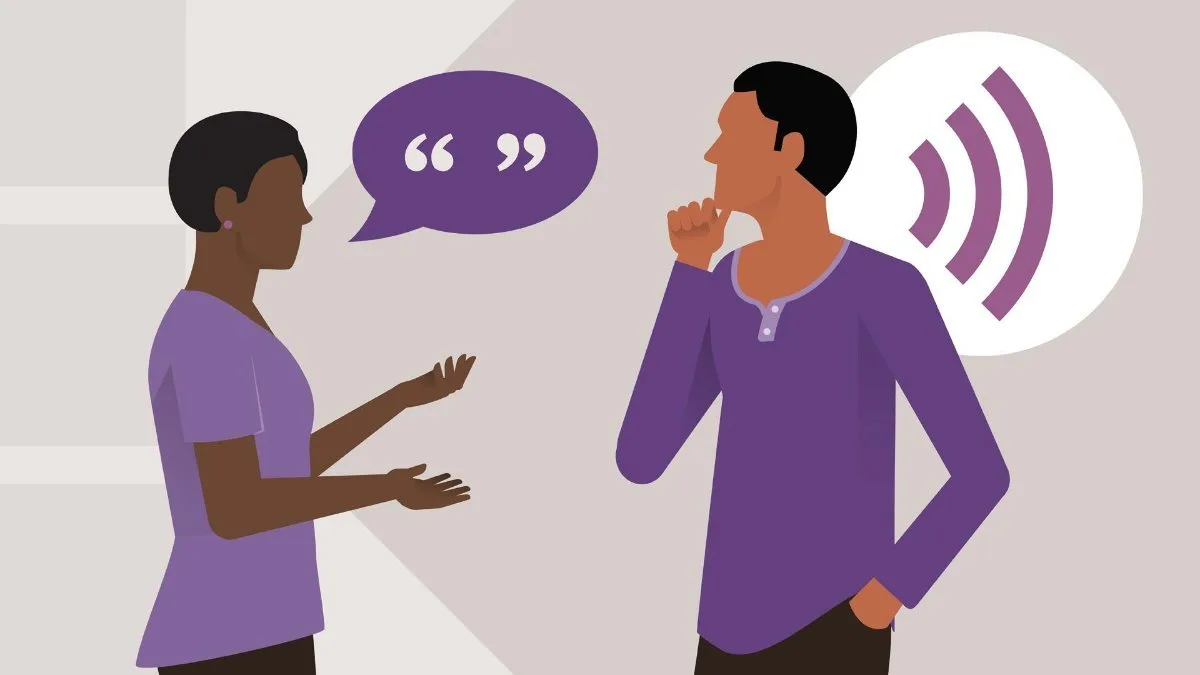
Most listening advice is really just politeness training. Nod, don't interrupt, make eye contact. None of that makes you a better listener; it makes you a more patient one. I've coached enough executives to know the difference matters: a patient listener waits for their turn to talk. A genuine listener changes their mind sometimes, because they actually let the other person's information in.
Here's my real position, and it's not comfortable for most leaders: if you've never walked out of a conversation with your view changed, you weren't listening; you were waiting. I say this to clients constantly, and it lands hard, because most of them think they're excellent listeners. They're not. They're excellent at appearing attentive while quietly building their rebuttal.
So this isn't a list of six generic tips. It's my working definition of listening as a leadership discipline: the practices I actually use in coaching sessions, board conversations, and the hard one-to-ones nobody wants to have.
There's a reason this matters more at senior levels than junior ones, and it's counterintuitive: the more authority you have, the worse your listening tends to get, not better. People filter what they tell you. Bad news arrives late and pre-softened. Disagreement gets rarer the higher you climb, not because your ideas improve with seniority but because fewer people feel safe enough to correct you. If your listening habits don't actively compensate for that filtering, you end up making decisions on a steadily narrowing slice of the truth, and you won't notice it happening, because everyone around you sounds like they agree.
Pay attention: Properly, not performatively
Full attention is rarer than most leaders admit. Phone away is the baseline, not the achievement. The real test is whether you're tracking the speaker's actual words or running a parallel process in your head: planning your reply, checking the time, deciding whether this meeting could have been an email. I tell clients: if you can predict your own response before the other person has finished their sentence, you weren't listening to that sentence. You were listening to your assumption of it.
Eye contact and nodding are useful signals to the speaker, but they're not proof of anything to you. The proof is whether you could repeat back what was said, in detail, five minutes later, not the gist, the specifics. That's the bar I set in coaching: specifics, not gist.
Clients can try a version of this after their next one-to-one: close the laptop, put the phone face down and out of reach, and write down three specific details from the conversation the moment it ends, not themes, actual details. Most leaders, the first time they try this, struggle to get past one. That gap between how attentive they felt in the room and what they can actually recall is the whole problem, condensed into thirty seconds of honest self-assessment.
Listen with an open mind, and notice when you don't
Open-mindedness isn't a personality trait you either have or don't. It's a discipline you apply moment to moment, and it fails fastest exactly when you need it most: in disagreement, under pressure, when someone challenges a decision you've already made. That's precisely when most leaders stop listening and start defending.
The practical move is to notice the internal flinch. The moment you feel yourself wanting to correct, interject, or explain why the other person is wrong, pause there. That flinch is data. It tells you exactly where your bias is strongest and exactly where you most need to keep listening rather than respond. I've watched senior leaders visibly relax once they stop treating disagreement as a threat to be managed and start treating it as information to be collected.
Clarify and confirm: Ask questions that cost you something
Most clarifying questions are safe. "What do you mean by that?" is fine, but it's low-risk; it doesn't commit you to anything. The clarifying questions that actually improve understanding are the ones that expose your own assumption: "I assumed you meant X, is that right, or was it something else?" That question can be wrong in public, which is exactly why it works. It forces genuine correction rather than polite confirmation.
Paraphrasing works the same way. Restating what someone said in your own words works as a test of whether you actually processed the content or just absorbed the tone; courtesy has little to do with it. If your paraphrase is thin or generic, that's the tell. Go back and ask again.
I'd add one more layer to this that gets skipped constantly: clarify before you clarify. Before asking your question, briefly state what you think you already understood, so the other person can correct the frame, not just the detail. "Before I ask my question, my understanding so far is that the delay started with procurement, not engineering. Is that right?" That single sentence does more to surface hidden misunderstanding than a dozen open-ended follow-up questions, because it exposes your working model rather than fishing for more raw information.
Avoid interrupting: Including the polite kind
Everyone knows not to talk over people. Fewer notice the quieter version: finishing someone's sentence for them, or jumping in the half-second after they pause to breathe, before they've actually finished the thought. That's still an interruption. It just feels helpful instead of rude, which makes it harder to catch in yourself.
The discipline here is holding a beat of silence after someone stops speaking (a full second, sometimes two) before you respond. Most people never let that gap exist. Filling it instantly signals that you were waiting to speak, not listening to finish.
Silence also does something else that's easy to underrate: it invites the speaker to keep going. People often stop at the first natural pause not because they've said everything, but because they expect to be interrupted there. Hold the silence and, more often than not, the most important part of what they wanted to say arrives second, after the socially safe version has already been spoken. Leaders who jump in early never hear that second part. They walk away thinking they have the full picture when they only have the opening statement.
Show empathy: Without collapsing into agreement
Empathy in leadership gets confused with agreement, and the two are not the same thing. You can accurately reflect someone's frustration ("it sounds like this decision landed badly with you") without agreeing the decision was wrong. That distinction matters enormously in performance conversations and organisational change, where leaders often avoid naming what they've heard because they're afraid naming it implies they'll reverse course. Naming it is not conceding it. It's what builds the trust that lets you hold the line afterwards.
I've seen this go wrong in both directions: leaders who stay so neutral they seem cold, and leaders who empathise so hard they quietly promise things they can't deliver. The skill is reflecting the feeling accurately while keeping your own position intact.
There's a version of empathy that's really just conflict avoidance wearing a kinder face: agreeing in the room to defuse tension, then reversing quietly afterwards. That's worse than not listening at all, because it teaches people that what they hear from you in the moment isn't reliable. Real empathy holds both things at once: I understand why this is hard for you, and my decision still stands. Leaders who can say both sentences in the same conversation, without flinching, are the ones teams actually trust, not because they always agree, but because they're consistent between what they say and what they do.
How I judge whether a leader is actually listening
- The five-minute recall test: Can they repeat specifics (not the gist) of what was said five minutes after the conversation ended? Gist means they were half-listening.
- The flinch check: Do they notice the internal urge to correct or defend mid-conversation, and pause there instead of acting on it? That flinch marks exactly where their bias is strongest.
- The translation test: When they paraphrase, do they use different words than the speaker, or just echo the same phrase back? Echoing proves nothing; translating proves understanding.
- The changed-mind audit: Across their last ten difficult conversations, did their position shift even once? If never, they're not listening; they're absorbing confirmation.
- The silence tolerance: Can they hold a full beat of silence after someone finishes speaking before responding? Instant response is usually proof they were waiting, not hearing.
Practice active listening: A better listener restates to understand, not to perform
Restating someone's point back to them is one of the most misused techniques in leadership communication, because most people do it as theatre. They repeat the words back nearly verbatim, which proves nothing except that they can echo. Genuine active listening means restating in language the speaker didn't use: forcing yourself to translate rather than mirror. If you can only repeat, you haven't understood. If you can translate, you have.
This is also where active listening pays off fastest in coaching and customer-facing conversations: the translation step surfaces misunderstandings before they become decisions, not after.
The other half of active listening that rarely gets taught is tracking what isn't said. Tone shifts, sudden vagueness on a specific topic, a question deflected rather than answered; these are as informative as the words themselves, sometimes more so. I coach leaders to keep a mental note of the moment a conversation gets noticeably shorter or more careful, because that's usually where the real issue lives, not in the parts the speaker was happy to elaborate on at length.
My honest view: Listening is a leadership decision, not a soft skill
I stopped calling listening a "soft skill" years ago. It's a decision: made repeatedly, under time pressure, often against your own instinct to defend or fix. Every leader I coach who struggles with team trust has the same root issue: they listen to gather ammunition, not information. The team can feel the difference within a single conversation, even if they can't name it.
The distinction I keep coming back to is this: a good listener understands what was said. A genuinely effective one is willing to be changed by it. That's the line most leadership training never crosses, because it's uncomfortable to teach: you can't fake being changed by something. Either the conversation moved you or it didn't.
If you want a single diagnostic for whether you're actually listening, use this: after your next difficult conversation, ask yourself honestly whether your position shifted at all, even slightly. Not whether you were polite. Not whether you nodded in the right places. Whether anything you believed going in was different coming out. If the answer is consistently no, across every conversation, look past your listening technique: you've already decided listening won't change anything, so you've stopped doing it in any way that counts.
That's the practice worth building, more than any of the six above. The techniques are just scaffolding. The real work is staying genuinely open to being wrong in front of the people you lead, which is exactly what I work on with executive clients who want to lead transformation without losing the trust of the people doing the work.